Sports & Performance Injury Care in Sacramento
Whether you're a recreational athlete, competitive athlete, or simply enjoy staying active, the right care can mean the difference between pushing through pain and performing at your best.
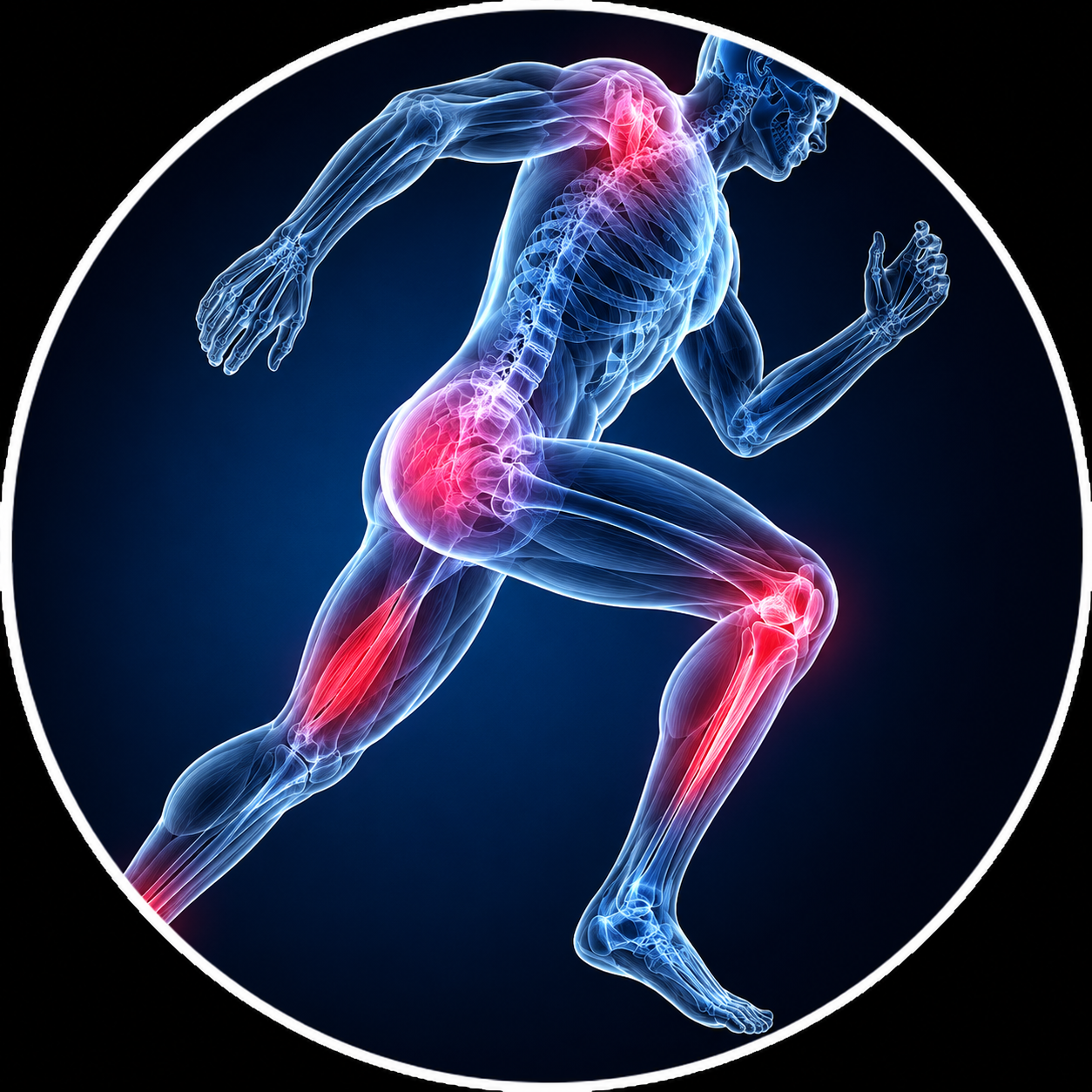
Sports injuries aren't always caused by the area that hurts. As a Sacramento sports chiropractor, I focus on identifying what's actually driving the problem so you can get back to doing what you love.
Speak directly with our office to discuss your symptoms and find out if care is right for you.
Request an appointment online and we'll confirm your visit time.
The Wellness Spa of Arden • Serving Sacramento Since 1993
Move Better. Recover Better. Function Better.
Curious how we think about pain in general? Read our philosophy →
Two Kinds of Sports Injuries
Understanding which type of injury you're dealing with shapes the entire approach to care
Why Old Injuries Still Matter
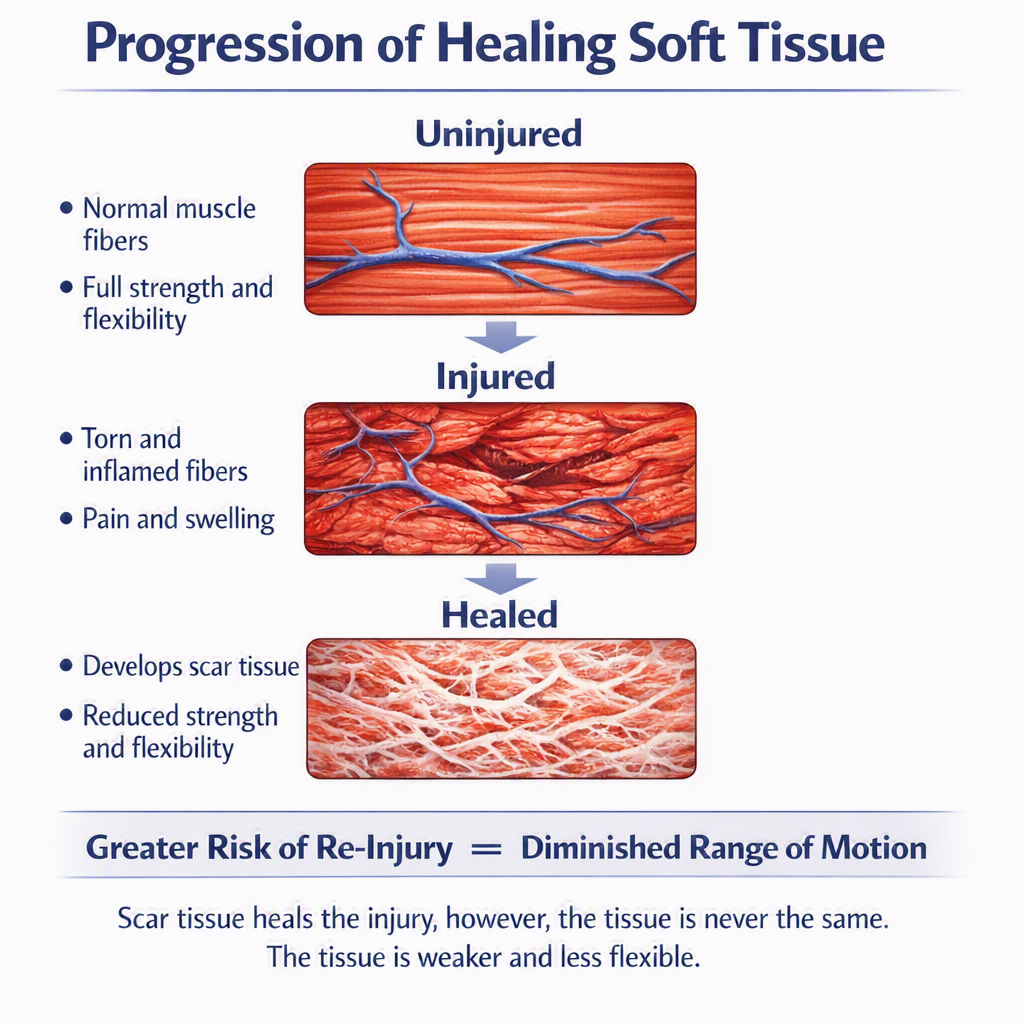
Many athletes I see are still dealing with the lingering effects of injuries they thought had healed years ago. An old ankle sprain, a tweaked shoulder, or a muscle strain from years ago that "healed fine." But it often didn't heal the way they think.
When tissue is injured, the body lays down scar tissue and adhesions to patch the area back together. That's a normal part of healing. The problem is that this repair tissue isn't as flexible or organized as the original. It can bind things up, almost like glue between layers that are supposed to slide freely.
Once a muscle, tendon, or joint capsule stops moving the way it should, the body begins compensating around that restriction. The old injury may not hurt anymore, but it quietly changes how the entire area functions, and that is often where new problems begin.
A stiff ankle can affect the knee. A restricted shoulder can change how the neck and upper back function. The body is remarkably adaptable, but those adaptations often come at a cost.
This is a big reason I spend so much time on the soft tissues, not just the joint. Freeing up those old restrictions is often the missing piece that allows the entire movement system to function the way it was designed to.
Why Two Athletes Train the Same and Only One Breaks Down
When injuries keep showing up mid-season, it's rarely about effort or conditioning. Two athletes can do the exact same training, and only one breaks down. People want to blame intensity or bad luck. It's usually neither.
The difference is how well each body shares and recovers from load between practices, games, and daily life. One athlete's system distributes the stress. The other keeps dumping it into the same overworked area, week after week, until something finally gives.
A big part of this starts before practice even begins. Many teams still warm up the same way they did decades ago, often working tissues that are already tight without considering what the athlete has been doing all day.
Here's a common example. A student or office-bound adult spends 6–8 hours sitting with the hips flexed and the body folded forward. Then practice starts, and the first warm-up is sitting down and reaching for the toes, placing the body right back into the same position it spent the entire day in.
That doesn't restore balance. It reinforces the same pattern that contributed to the problem in the first place.
When coaches tell me their team is falling apart by mid-season, this is one of the first things I look at. The injury isn't usually where the problem started. It's the point where the body finally ran out of room to keep compensating.
Who We Help
As a Sacramento sports chiropractor, I work with recreational athletes, competitive athletes, and active individuals across virtually every sport and activity level.
Rotational Sports
Golf · Baseball · Softball
Shoulder, elbow, and spinal strain from repetitive one-sided rotation.
Endurance Sports
Running · Cycling · Triathlon
Knee, hip, and spinal issues from repetitive impact and training load.
Court Sports
Pickleball · Tennis · Basketball · Volleyball
Ankle, knee, shoulder, and spinal strain from quick-direction movement.
Winter Sports
Skiing · Snowboarding
Recovering from the demands of an intense, concentrated season.
Contact & Combat Sports
Wrestling · Football · Rugby · MMA
Whiplash, joint strain, and the cumulative toll of repeated impact.
Strength & Fitness
CrossFit · Weightlifting · Functional Fitness
Shoulder, low back, and joint stress from heavy and repetitive loading.
Active Adults
Weekend Warriors · Fitness Enthusiasts
Staying active without being sidelined by recurring aches and tweaks.
Youth & Competitive Athletes
High School · Club · Collegiate
Recovering from injury and reducing the risk of it coming back, whatever the sport.
Common Sports Injuries We See
Conditions we evaluate and treat include:
The specific diagnosis matters, but so does understanding why the injury developed in the first place.
What I Do Differently
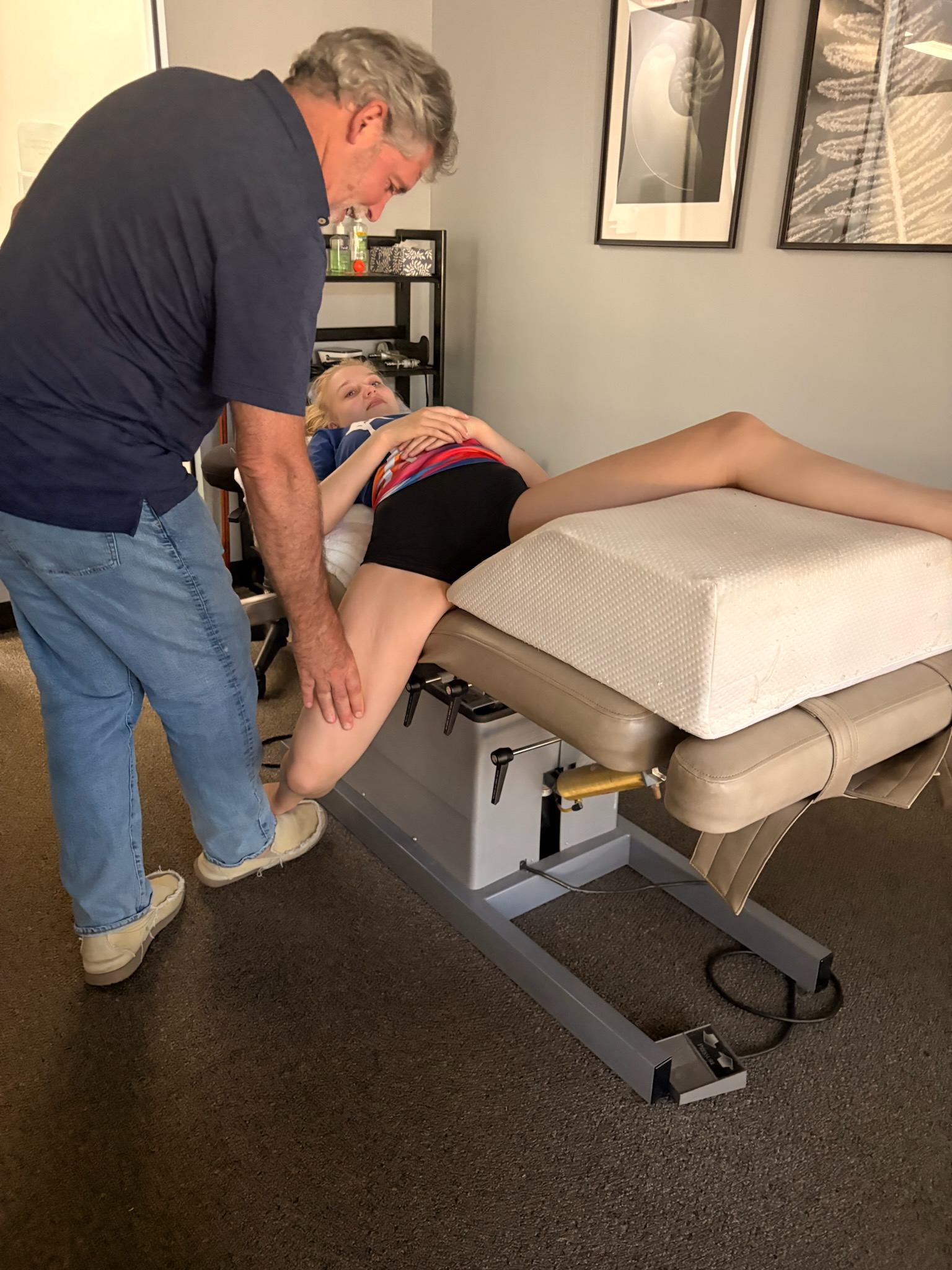
Every athlete moves differently. Before treatment begins, I evaluate posture, joint motion, muscle balance, previous injuries, and movement patterns to understand why the tissue became overloaded in the first place.
Most athletes come in because something hurts. But plenty come in simply wanting to move better, recover faster, or stay ahead of an injury before it ever shows up. The goal is the same either way. Restore functional movement so the whole body works together the way it's supposed to, and help you get back to training, competition, or just staying active for years to come.
Care starts with understanding how the athlete is actually moving under load, not just where the pain showed up. Before I treat the injury, I want to understand which muscles are doing too much of the work, which joints have stopped contributing, and how those compensation patterns are affecting movement.
How Care Works for Athletes
The same order every time, because each step sets up the next
It's like a rusty hinge. You can force the door, but until the hinge moves freely again, it keeps binding in the same spot. With athletes, that spot is usually where the next injury shows up.
Most treatment focuses on getting you out of pain. My focus is on correcting the pattern that created it, so you don't keep meeting the same injury in a different uniform.
Why I Don't Rush the Adjustment
Many athletes are surprised that I don't immediately adjust the area that's hurting.
Tight, overactive muscles often make it harder for a correction to hold over time. That's why I often begin with heat, targeted soft tissue work, stretching, and muscle balancing before restoring joint motion.
Once the surrounding tissues relax, adjustments are often gentler, more comfortable, and more likely to last. Every part of the visit prepares the body for
the next step.
Many professional and collegiate sports programs include chiropractors as part of their sports medicine teams because restoring joint motion, improving movement quality, and optimizing recovery all play an important role in injury rehabilitation and athletic performance.
Since 1993, I've worked with athletes across every level and sport, including runners, cyclists, swimmers, wrestlers, MMA fighters, baseball and softball players, golfers, skiers, CrossFit athletes, and weekend warriors. After more than three decades, very few movement patterns are unfamiliar, and that experience often helps identify underlying movement problems that are easy to miss.
"The injury is often where the body finally gives up compensating, not where the problem actually began."
Frequently Asked Questions
Can chiropractic care help sports injuries?
Yes. Chiropractic care can be beneficial for both acute injuries and overuse conditions by restoring
joint motion, improving movement patterns, reducing soft tissue restrictions, and helping the body
recover more efficiently.
Why do my sports injuries keep coming back?
Recurring injuries often mean the painful area isn't the entire problem. Old injuries, muscle imbalances, joint restrictions, scar tissue, and compensation patterns can continue placing excessive stress on the same tissues until the underlying cause is corrected.
Do you work with youth and high school athletes?
Absolutely. We work with athletes of all ages, from youth and high school competitors to adults who simply want to stay active. The goal is not only to recover from injury, but to improve movement and reduce the risk of future problems.
Can old injuries affect my current performance?
Yes. Even injuries that seemed to heal years ago can leave behind scar tissue and movement restrictions that change how your body functions. Those changes may contribute to pain, reduced performance, or recurring injuries in completely different areas.
Do I need to stop training while I'm receiving care?
Not necessarily. Every injury is different. When appropriate, we try to keep athletes participating at a level that allows healing while minimizing further stress. Recommendations are always based on the specific injury, your sport, and your stage of recovery.
What should I expect at my first visit?
The first visit focuses on understanding your history, your sport, and how your body is actually moving. I evaluate posture, joint motion, muscle balance, and previous injuries to identify why the problem developed, then walk you through what care would look like for your specific situation.
How many visits will I need?
It depends on the injury, how long it's been going on, and your goals. Some athletes feel significant
improvement quickly, while older or more complex patterns take longer to fully correct. The aim is
always lasting change, not an open-ended schedule of visits.
Can chiropractic care help with athletic performance?
It can. While the focus is on recovery and reducing injury, restoring proper movement and joint function
often helps athletes move more efficiently. Better movement quality can support performance, even
though the primary goal is keeping you healthy and in your sport.
"If it's not broke or bleeding, just wrap me up and get me to Dr. Jim."
A patient, to his coach, after a sports injury
Why Athletes Choose The Wellness Spa of Arden
Serving Sacramento since 1993, with over 35 years of clinical experience
A full-body approach that treats the muscles and the joints together
Functional movement evaluation to find the real driver of the problem
Soft tissue work and muscle balancing before adjusting
Individualized rehabilitation built around your sport and your body
One-on-one care, never rushed, focused on lasting results
Ready to Get Back to Doing What You Love?
Whether you're dealing with a recent injury, recurring pain, or a performance issue that just won't go away, the first step is identifying what's actually driving the problem.
If you've tried resting, stretching, or simply pushing through it without lasting results, it's time to find out why the problem keeps coming back.
Speak directly with our office to discuss your symptoms and find out if care is right for you.
Request an appointment online and we'll confirm your visit time.
We provide sports chiropractic care for athletes throughout Sacramento, Arden-Arcade, Carmichael, Fair Oaks, Citrus Heights, Rancho Cordova, Folsom, Granite Bay, El Dorado Hills, East Sacramento, and surrounding communities.